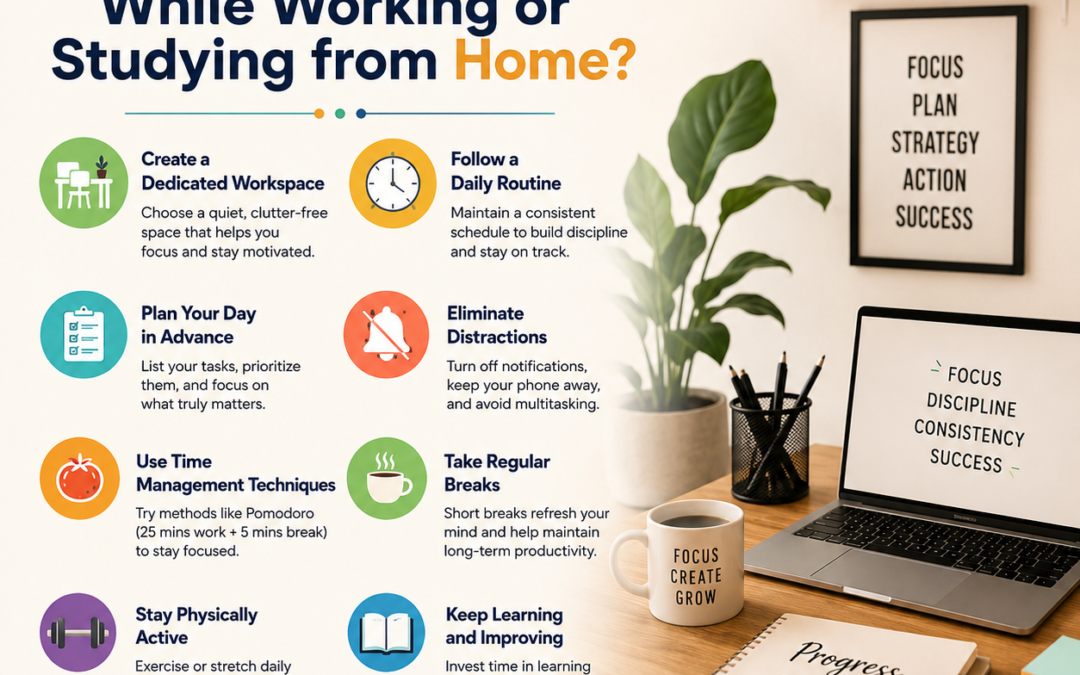
Working or studying from home has become a normal part of life for many people. While it offers flexibility and comfort, it also comes with distractions that can reduce productivity. Whether you’re a student preparing for exams or a professional managing deadlines, building the right habits can help you stay focused and achieve more.
Create a Dedicated Workspace
One of the biggest mistakes people make is working from the bed or couch. Having a dedicated workspace helps your brain associate that area with productivity. It doesn’t need to be a separate room—even a clean desk in a quiet corner can make a big difference.
Follow a Daily Routine
A consistent routine improves discipline and reduces procrastination. Try to wake up at the same time every day, get ready as if you’re going to school or the office, and set fixed hours for work or study sessions.
Plan Your Day in Advance
Start each day with a clear plan. List the top three tasks that must be completed and prioritize them before checking social media or emails. Breaking large tasks into smaller steps makes them easier to manage.
Eliminate Distractions
Turn off unnecessary notifications, keep your phone away during focused sessions, and avoid multitasking. Using techniques like the Pomodoro Method (25 minutes of work followed by a 5-minute break) can help maintain concentration.
Take Regular Breaks
Working continuously for hours can reduce efficiency. Short breaks improve focus, reduce eye strain, and help you return to your tasks with more energy.
Stay Physically Active
Exercise plays a major role in productivity. Even a 20-minute walk, stretching session, or light workout can improve mood, energy levels, and mental clarity.
Keep Learning and Improving
Productive people constantly look for ways to improve their skills. Reading books, taking online courses, or learning new tools can help you become more efficient in the long run.
Final Thoughts
Productivity is not about working longer hours—it’s about working smarter. By creating a routine, minimizing distractions, and taking care of your physical and mental health, you can make working or studying from home both effective and enjoyable.
Frequently Asked Questions (FAQs)
1. What is the best way to stay focused while working from home?
Create a dedicated workspace, follow a schedule, and remove distractions such as unnecessary phone notifications and social media.
2. How many hours should I work or study each day?
It depends on your goals, but most people are productive for 4–6 hours of deep, focused work rather than 10+ hours of distracted work.
3. What is the Pomodoro Technique?
The Pomodoro Technique is a time-management method where you work for 25 minutes and then take a 5-minute break. After four sessions, take a longer break of 15–30 minutes.
4. How can I avoid procrastination?
Break tasks into smaller steps, set deadlines, and start with the easiest action. Beginning a task is often the hardest part.
5. Does exercise really improve productivity?
Yes. Regular physical activity increases energy levels, improves concentration, and helps reduce stress.
6. Should I use productivity apps?
Productivity apps can help with task management and time tracking, but they work best when combined with good habits and a consistent routine.
7. What should I do if I lose motivation?
Take a short break, revisit your goals, and focus on completing one small task. Momentum often returns once you get started.
8. Is multitasking effective?
No. Studies show that multitasking reduces efficiency and increases mistakes. Focusing on one task at a time usually produces better results.