Here are 10 frequently asked questions and detailed answers designed to embed directly into your real estate article.
Which areas in Hyderabad currently offer the highest capital appreciation?
Answer:Emerging western corridors like **Kokapet, Neopolis, and Tellapur** lead in capital appreciation due to major commercial developments and infrastructure expansion. Mature IT pockets like Gachibowli and HITEC City provide consistent, steady growth, while long-term high-yield potential is shifting toward fringe zones along the Outer Ring Road (ORR) such as Kollur and Patancheru.
What is the average rental yield in Hyderabad’s real estate market?
Residential properties in Hyderabad generally generate annual rental yields between **3% and 5%**. Prime IT locations—such as HITEC City, Gachibowli, Kondapur, and Financial District—achieve the highest yields (up to 5%–6.5%) due to sustained demand from tech workers and corporate tenants.
Why is West Hyderabad the dominant investment hub?
West Hyderabad houses the city’s primary economic engines: HITEC City, the Financial District, and upcoming tech parks in Neopolis. Proximity to major multinational employers, high-end social infrastructure (schools, hospitals, malls), and direct access to the ORR keep housing demand consistently high in the west.
Where should first-time or budget-conscious buyers look to invest?
Localities like **Patancheru, Kukatpally, Kompally, and Uppal** offer lower entry prices per square foot while maintaining solid connectivity. These areas benefit from metro access or highways, making them ideal for budget-conscious buyers seeking long-term growth without paying central IT corridor premiums.
How does the Outer Ring Road (ORR) impact real estate prices in Hyderabad?
The 158-km 8-lane expressway has drastically reduced commute times across the city. Neighborhoods within 2–5 km of ORR exit interchanges (like Narsingi, Tellapur, Kollur, and Shamshabad) have seen rapid appreciation as developers build large-scale gated communities with seamless connectivity to the airport and IT hubs.
Is it better to invest in plots, villas, or gated community apartments?
Apartments (Gated Communities):** Best for immediate rental income, lower maintenance hassle, and modern amenities.Plots (HMDA/RERA Approved):** Higher percentage capital growth over a 5–10 year period, but zero monthly rental yield.Villas: Excellent land value retention and luxury living, but require higher entry capital (typically ₹3 Cr+).
—
### **7. What are the key legal approvals to verify before buying property in Hyderabad?**
Always verify that the project is registered with **TS-RERA** (Telangana Real Estate Regulatory Authority) and has layout approval from **HMDA** (Hyderabad Metropolitan Development Authority) or **GHMC** (Greater Hyderabad Municipal Corporation). Ensure the builder has a clear land title, an Encumbrance Certificate (EC), and a valid Occupancy Certificate (OC) upon completion.
—
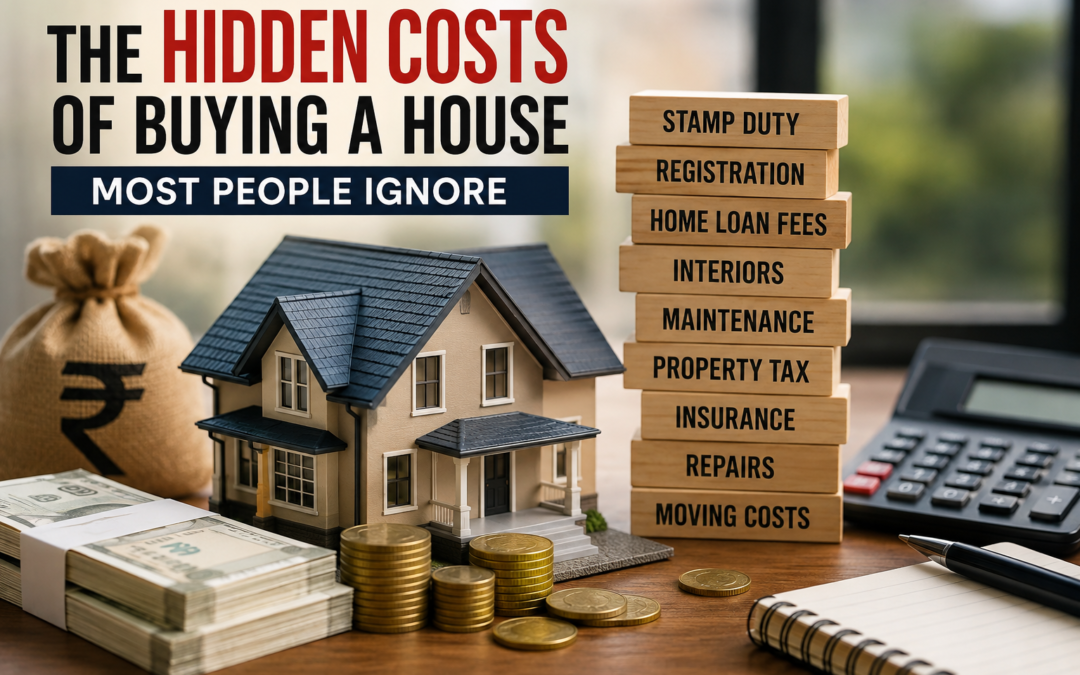
### **8. What extra costs should buyers factor in besides the base property price?**
**Answer:** Buyers should budget an additional **8% to 12%** above the property agreement value to cover government taxes and amenities:
* **Stamp Duty & Registration Charges:** ~7.5% of total property value.
* **GST:** 5% on under-construction properties (1% for affordable housing); 0% on ready-to-move properties with OC.
* **Corpus Fund & Maintenance Charges:** Collected by the homeowners association (HOA).
* **Amenities & Parking Fees:** Set by individual developers.
.Why is Hyderabad popular among Non-Resident Indian (NRI) investors?**
**Answer:** Compared to Mumbai or Bengaluru, Hyderabad offers relatively competitive per-square-foot entry prices, strong economic stability driven by tech and pharma sectors, transparent RERA governance, and high-end luxury gated community developments that match global living standards.
10. Is commercial real estate a better investment than residential in Hyderabad?**
**Answer:** Commercial real estate (office spaces, retail units, co-working spaces) yields higher returns (**7% to 10%** annually) compared to residential (3%–5%). However, commercial properties require higher capital investment, involve longer lease lock-in negotiations, and carry higher vacancy risks during economic downturns.
—